|
|
 BERRY
& RHUBARB PRODUCTION BERRY
& RHUBARB PRODUCTION
Our
primary crop is red raspberries and our farm is the perfect environment
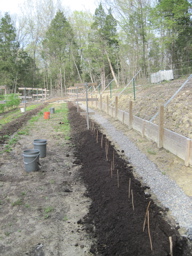
for brambles. Gentle slopes provide the air circulation needed
to grow large sweet raspberries. The field area we chose is surrounded
by Tulip Poplars, one of the first trees to bloom in spring. The
tulip poplars bring the first bees of the season, an important
ingredient to raspberry growing!
We've
learned a lot about growing raspberries since 2010. Farmers are
the eternal optimists, there's always next year..and that's just
about the way it goes. Raspberries aren't an easy crop, while
we continue to grow the same acreage of red raspberries, as early
as 2013 we began to add to our small fruit crops. First it was
blackberries, then it was heirloom, uncommon berry types. Along
the way we also added melons and rhubarb to our offerings. In
2017 we're expanding our strawberry production to hopefully be
able to offer quantities at market.
You
can read about our berries & rhubarb on this page and our
melons here.
|
|
VARIETIES
WE GROW
Our goal is to be able to offer fresh and unusual
small fruit all summer. Everything
is dependant on mother nature, we can only plan and execute!
Our
rhubarb may resemble the dry stalks you see at the supermarket,
but they're not. We grow heirloom, old time varieties your grandmother
would recognize.
We
choose the berry varieties we do because they are not the kinds
of berries the large growers produce for travel across the country
to the local supermarket.
With
the raspberries, they are varieties that have true raspberry taste,
not like the ones in the plastic containers you find refrigerated
or frozen at your big grocery. Those have no taste, and when you
find a box with some taste, it's a plastic taste. The blackberries
we chose follow the same reasoning as the raspberries, in that
they have true blackberry taste.
We
also have learned to grow heirloom berry varieties you won't find
anywhere but the farmer's market. As available, we also forage
and harvest a variety of wild
berries as well. All sweet. All uniquely found at the farmer's
market.
HEIRLOOM
ANNUALS |
|
|
|
CAPE
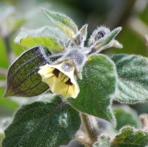
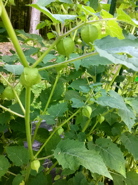
GOOSEBERRIES
Originally cultivated in the Andes where
they are still grown today. The plant was also grown by
early settlers at the Cape of Good Hope before 1807. Today
in South Africa they are commercially cultivated and exported.
Australians gave them their common name after seeds were
brought to Australia and cultivated.
Cape
Gooseberries are a member of the nightshade (Solanacaea)
family related to tomatoes. Grown as a perennial in the
tropics, we grow them as an annual. Also known as Peruvian
Cherries, Inca Berries and Aztec Berries.
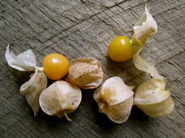
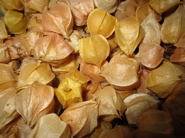
The
Cape gooseberry is wrapped in a thin, parchment-like husk.
The fruits turn from a pale green to an amber or golden
orange color as they ripen. Cape Gooseberries are much larger
and sweeter than Ground Cherries. The flavor of the Cape
gooseberries is very tart, earthy and citrusy. Fresh Cape
gooseberries can be eaten raw, preserved or pickled. They
become available late August into October.
|
|
|
|
GARDEN
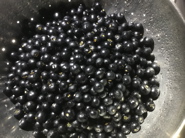
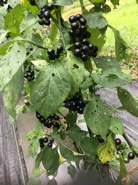
HUCKLEBERRY
Originated in Africa, Garden Huckleberries
have been cultivated for many decades. A
member of the nightshade (Solanacaea) family, related to
tomatoes. They are not related to Huckleberries found in
the Pacific Northwest of America.
Grown
as a perennial in the tropics, we grow them as an annual.
The mature berries are about the size of a big blueberry
and have a tough skin.
They
are a terrific fruit for jams, jellies and pies not so great
for eating fresh. We use them primarily in jam which tastes
blueberry-grape, and is amazing! They become available Late
August into October.
|
|
|
|
AUNT MOLLY'S GROUND CHERRIES
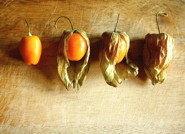
Produces a little yellow-orange fruit inside
a paper wrapper. Fruits fall from the plants when ripe and
that’s why they are called Ground Cherries. A
member of the nightshade (Solanacaea) family, related to
tomatoes.
We
grow Aunt Molly's variety because it does well in cooler
climates and matures faster than other varieties. Ground
Cherries are easy to grow from seed, but need an early start,
8- 10 weeks before the last frost day just like pepper plants.
Ground
Cherries have a very unique, delicious taste, very sweet
and a lot like vanilla custard. They are good used in jams,
pies, custards. We also dry these and use them like raisins.
They become available late August into October.
|
|
|
|
MOUSE
MELONS
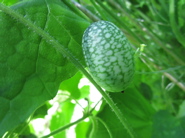
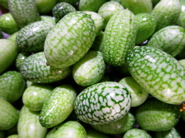
Technically, not a berry, but they are
an heirloom fruit we love to grow! Cucamelons (Melothria
scabra), also called “Mexican sour gherkins”
and “mouse melons” are native to Central America.
They were a very common part of the diet of ancient Aztec
people.
They
look like miniature watermelons but are about the size
of grapes and taste like cucumbers with a tinge of lime.
They are packed with antioxidants, vitamins and minerals.
Mouse melons are ready to harvest and eat when they are
about the size of a grape and feel firm to the touch.
They become available late July into October.
|
|
HEIRLOOM
PERENNIALS |
|
|
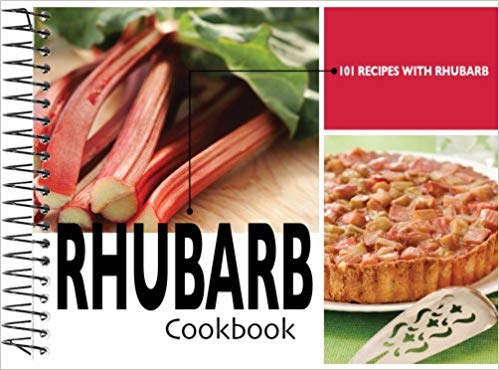
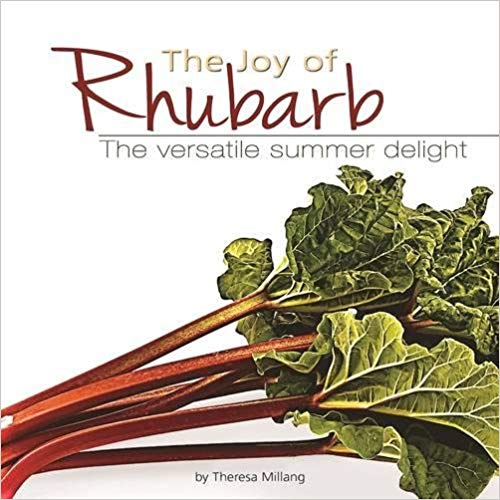
RHUBARB
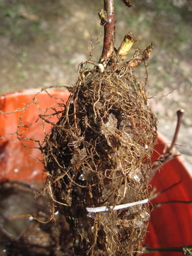
The rhubarb variety we grow is an old time
rhubarb with a tart Spring time taste. We have grown both
green and red varieties, but now most of our plants are
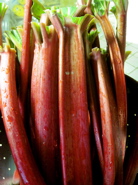
the red variety lending itself to beautiful fresh stalks
for market sales.
Rhubarb
is a pretty plant in the garden, it's deep green leaves
are huge supported by beautiful red stalks. It's one of
the first plants to emerge in Spring. High in antioxidants
and vitamin C, it ought to be considered a super food. We
bring fresh rhubarb to market in May and into June. We also
produce rhubarb and strawberry-rhubarb jams in the Spring.
|
|
|
|
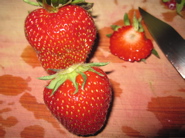
STRAWBERRY
The strawberry plants we trialed were a
pretty big success, so much so that we decided to install
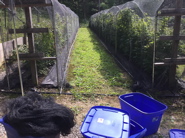
several hundred plants in the raspberry field. The raspberry
field was the perfect place as the soil is the right pH,
the field is protected from winged and footed critters.
The growing technique we learned over the 2016 winter
will allow us to bring a first year crop to market.
Nutritionally,
strawberries are about as good as it gets, high in antioxidants
and vitamin C and loaded with the flavors of Spring. Sweet
varieties that you won't find at the supermarket, nor
will you find with other farmers. We chose unique heirloom
varieties that are tried and true. Sweet beautiful berries
from the end of May to the end of June!
|
|
|
|
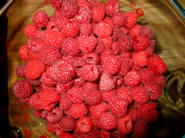
RED
RASPBERRY
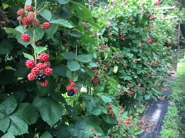
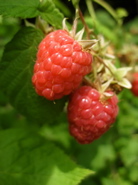
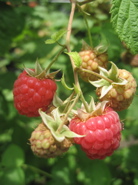
We've been growing red raspberries since
2010. We've learned a lot. Our berries are probably the
best you're ever going to taste as we chose varieties you
won't ever find locally.
Considered
a super food, raspberries are high in antioxidants and vitamin
C. They are known to possess anti inflammatory, anti cancer
and general all around wellness qualities. Red raspberry
leaf tea is considered one of the best around for nursing
moms. We offer red raspberries from the end of May to mid-July.
Many
people have asked why we don't have Autumn raspberries and
that's because many of these varieties are hybrids not heirlooms
and nothing matches the flavor of true heirloom summer varieties
of the Summer red raspberry!
|
|
|
BLACKBERRY
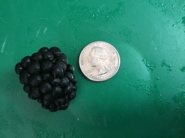
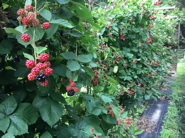
We've been growing blackberries since 2013.
While not as difficult as our raspberries, they are challenging
as we picked an interesting variety that requires severe
pruning and training for the space we've given it.
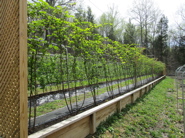
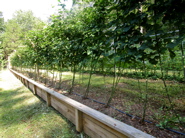
Taking
a page from the French fruit farmer, the Art of Espalier
is all about selectivity pruning and training branches
to a desired shape. Where the French fruit farmer gets
to do the pruning once or twice, we get to do it every
year. We have found this sort of pruning adds greatly
to the production of the huge flavorful berries these
heirloom plants produce. Our blackberries are the best
you're ever going to taste and are available from early
August to mid September.
|
|
| We
have inserted Amazon affiliate links in many places at this
website. Purchases made by using these links doesn't cost
you any extra but allows us to collect a small advertising
percentage of the sale from Amazon. |
|