| WHO
WE ARE
The people who are Shagbark Farm in Ohio are:
|
|
Amy
- Grew up in an apple orchard on the Northwest side
of Cincinnati. Dad was always tinkering with the apple
and pear trees and mom could (and still can!) grow
anything from seed and always had a huge "Victory
Garden" at home. As an adult, Amy took a sauce
class at the Culinary Institute in Napa Valley which
inspired a lifetime of experimenting with food, especially
spices and herbs, but also fresh produce. Amy is in
charge of anything with roots or fur, marketing, product
research, creation and production. She is also the
"I" on many of these web pages as well as
the photographer....
Starr
- Grew up for the most part on his grandparents farm
in Loveland Ohio. Grandfather taught farming techniques
based in tradition and the country gentlemans methods
to getting things done around the farm. Grandmother
knew how to get just about anything to grow and knew
what do with what grew on the farm or that was bartered
or traded in. At our farm, Starr commands any feat
of engineering or building, crop and equipment research,
head water provider, head schlepper of all dirt, compost,
gravel, mulch, captains anything that runs on propane,
diesel or gasoline and is a general all around good
egg.
If
you understand anything about Cincinnati, Eastsiders
and Westsiders can be very different! But in this
case Eastside meets Westside with the one major thing
in common!
We
like food that tastes like food
and that has been the goal of what we are doing.
Read
further on this page to learn about the history
of our farm, our farm practices,
how we use the land and water,
how we keep our crops protected
from local "critters".
|
Get
to know us.
A short video here
|
|
|
NOTE:
We
have inserted Amazon affiliate links in many places
at this website. Purchases made by using these links
doesn't cost you any extra but allows us to collect
a small advertising percentage of the sale from
Amazon.
NOTE:
We're also required to say "Shagbark Farm
Ohio L.L.C is a participant in the Amazon Services
LLC Associates Program, an affiliate advertising
program designed to provide a means for sites to
earn advertising fees by advertising and linking
to Amazon.com. Amazon.com is solely responsible
for fulfillment of book orders placed through these
links. "
|
|
FARMING
PRACTICES

|
We are a biodynamic farm
that utilizes permaculture techniques and forest stewardship
council practices. |
Biodynamic
farming methods all work
off the concept that a farm is a site-specific ecosystem.
Biodynamic farming is a holistic system that places importance
on all of a farm's elements: soil, water, plants & animals.
These methods rely heavily on soil building, water conservation,
composting, animal production and animal by-products. Not
all growers using biodynamic techniques adhere to the complete
biodynamics program. You can be certified, but you do not
need to be certified to be considered a biodynamic farm.
|
Permaculture
techniques include a design
system that creates a sustainable food production environment.
This environment begins with soil building, uses specific
site design with a focus of more perennial plants less annuals,
utilizes high density growing, companion planting and compost
production and vermiculture. These techniques encourage
growing more food in less space. |
Forest
Stewardship Council Practices (FSC)
Encourages the efficient use of the forest’s multiple
products; Conserves biological diversity and its associated
water resources, soils, and unique and fragile ecosystems
and landscapes; Monitors the condition of the forest &
maintains the health of the forest.
|
Although
not certified organic, we follow natural, organic, sustainable
farming techniques and environmental designs that rely on all
natural methods. Some of the permaculture techniques we implement:
high density growing, composting, &
vermiculture, companion planting, weed burning,
and integrated pest management(IPM). We follow
forest stewardship council (FSC) practices
to maintain our farm's forest productivity and safe water. We
drip irrigate all of our crops which reduces plant stress, resulting
in a decrease in pest and disease problems as well as increasing
the quality and size of our crops. All of our irrigation needs
are supplied by rain or our pond.
Our
farm is surrounded mostly by cattle and hog farmers so harmful
pesticides that float from one farm to another is not an issue
with our fresh product production. Rain and sunshine are the primary
environmental elements our crops are exposed to. We use natural
remedies when necessary, and
the majority of our crops are not sprayed at all. Our goal is
to provide the freshest, highest quality locally produced products
possible.
.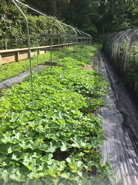
High
density growing with our melons |
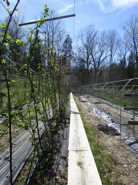
Espaliered
brambles |
|
High
density growing is a technique
that ignores traditional spacing requirements for more concentrated
spacing. This encourages stronger plants to survive, weaker
ones to die back. Thicker concentration discourages weed
growth. The result is more food produced in less space.
Espalier,
a technique borrowed from French fruit growers where orchard
tree branches are trained to grow flat against a wall, supported
on a lattice or a framework of stakes. This is done so more
trees can be installed in less space than traditionally
required. We take that to a new level with brambles allowing
us to have a denser population of canes per foot, allowing
better lateral growth for easier picking, resulting in a
greater yield.
|
|
Composting
is as old as gardening. We harvest composted goodness
several ways. Our three bin system is the primary
source of compost. Weeds, leaves and plant castoffs
are placed in one bin and "stirred"
with a pitchfork periodically. As it begins to
decompose we continue to place new weeds, leaves
and plant castoffs into the second and third bins
allowing the first to become true compost.
|
|
|
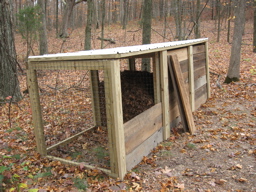
We
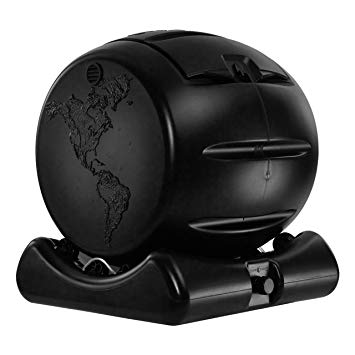
utilize a 3 bin composting system. |
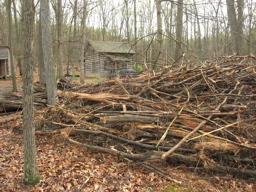
We
shred downed tree branches and allow them to decompose |
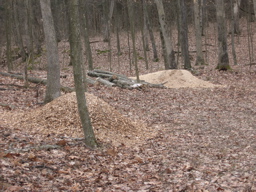
Two
piles of shredded mulch |
|
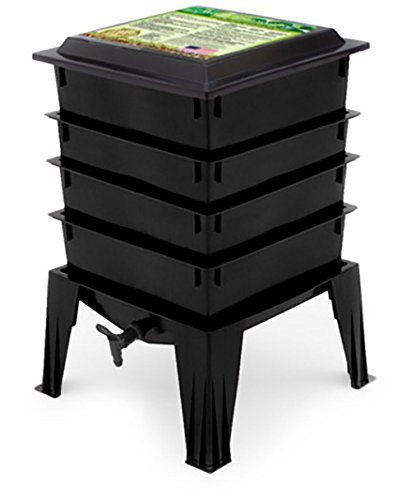
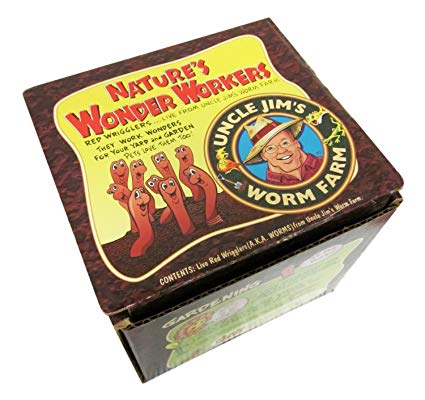
Vermiculture
is the process of garden composting using worms. We use
kitchen scraps and produce not good enought for market
or other end products to feed the worms. Worms also enjoy
certain paper garbage and coffee grinds! The worms consume
the decaying organic material and then flush it out of
their system in what is referred to as "castings"
or "worm manure". The worm castings are nutrient
rich and considered compost gold. Worm manure is an excellent
soil conditioner and all-natural fertilizer, they will
never burn the delicate roots of a plant and they also
contain beneficial microbes that help protect plants from
a variety of diseases.
|
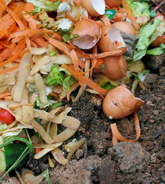
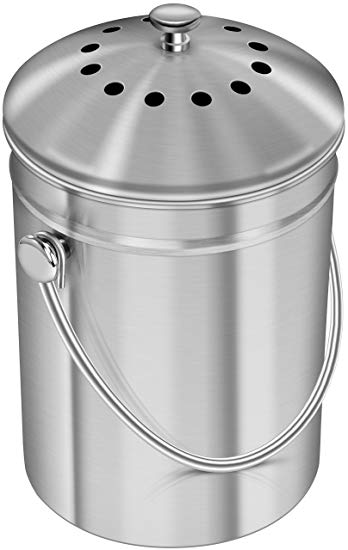
Kitchen scraps tossed into worm tray |
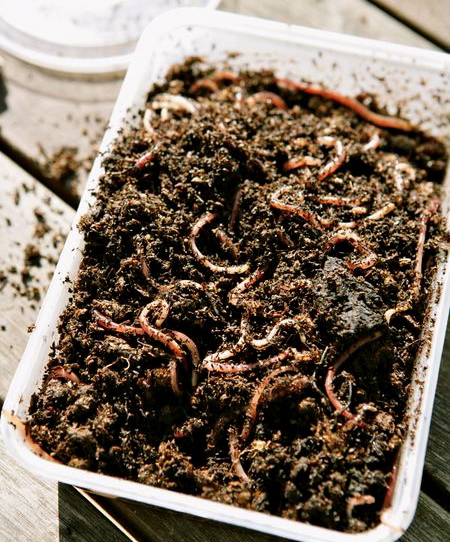
Worm tray decomposition |

Common Tansy |
Companion
planting is an important
part of integrated pest management. Companion planting
is a technique used to encourage desirable pests or discourage
undesirable pests by installing herbs and flowers that
either encourage or discourage. There are also plants
which when residing in the same proximity improve the
quality of one or both plants, like the age old old wives'
tale to plant borage with tomatoes and the tomatoes will
taste better. They do. And that's what we're all about
- food that tastes as it should.
There
are many varieties of herbs and flowers that can be used
for companion plants. I use lemon balm, lavender, tansy
and rosemary as companion plants to the herb plants that
are the most susceptible to pest infestation.
|
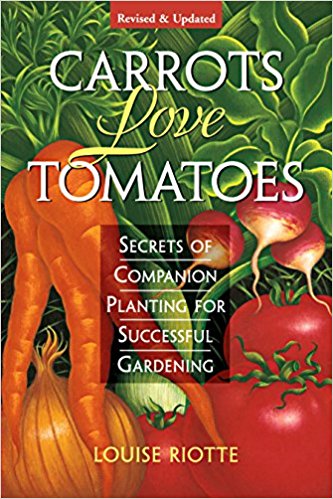
Carrots
Love Tomatoes: Secrets of Companion Planting for Successful
Gardening |
 |
 |
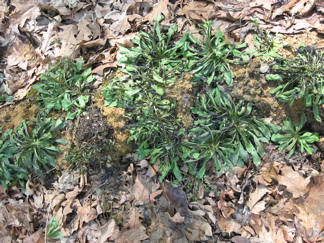 |
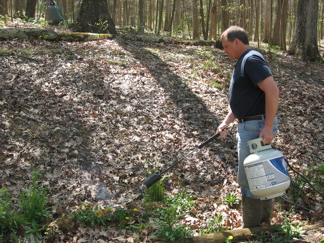
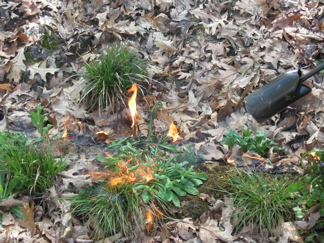
| Weed
Burning is
an effective
method we have found for massive and large weed eradication.
|
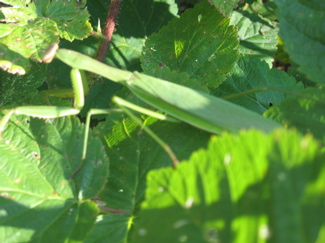 Praying
Mantis on raspberry leaves
Praying
Mantis on raspberry leaves |
Integrated
Pest Management(IPM) is
an effective and environmentally sensitive approach to pest
management that relies on a combination of common-sense
practices. IPM is not a single pest control method but,
rather, a series of pest management evaluations, decisions
and controls. Adams county is home to some of the most bizarre
insects we have ever seen, but the hardy standards are there
as well. We were excited to see a large quantity of praying
mantis take up resident in the raspberry field. We also
have a huge quantity of ladybugs present in the field, both
orange and red species. |
We
follow Forest Stewardship Council (FSC) practices
to keep our forest healthy. It is a large part of our farming
operation as we see what the forest produces as just as
important as what we cultivate.
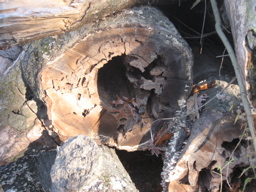
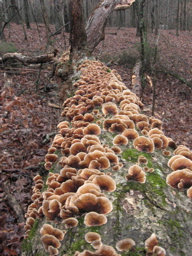
Our
FSC practices include monitoring our forest for disease,
rot, lightening strike or other natural occurrences that
harm the trees and undergrowth. We remove dead trees and
trees that have been harmed and could cause harm or danger
to the healthy trees. We remove smaller trees that can crowd
or otherwise undermine healthy trees.
|
Acorn
Foraging: Everything You Need to Know to Harvest One of
Autumn¹s Best Wild Edible Foods,
|
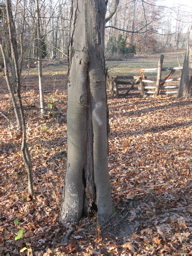
Trees inappropriately spaced can cause inosculation. Inosculationis
a natural phenomenon in which
two trees grow together.This often causes rot at the base.
|
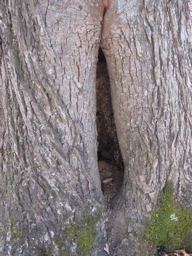
Rot at the base of insuculated trees. |
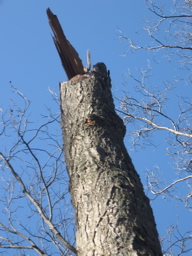
Lightening
strikes often will kill a tree. |
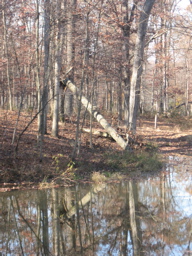
Tornadoes and wind shears can kill trees. |
LAND
USAGE
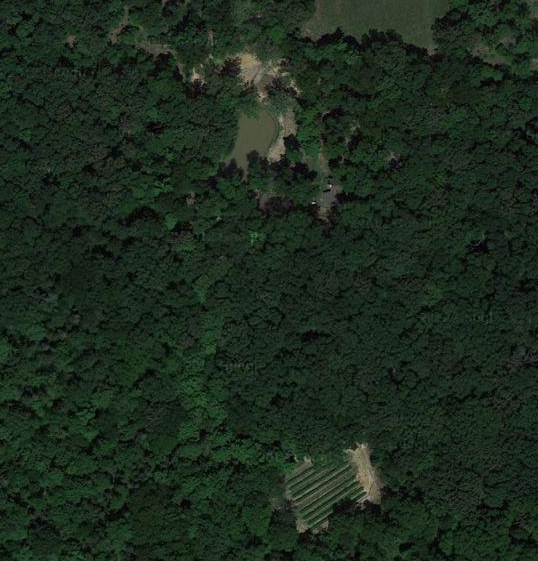
Google
earth image of our farm. |
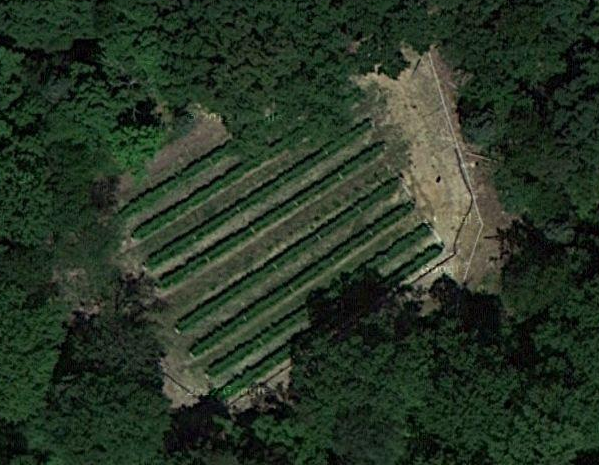
Google earth image of our raspberry field.
|
 Our
farm was a small part of a large Adams County, Ohio farm that
has been owned by the same family for generations. The topography
lends itself to a variety of microclimates which provide a variety
of natural and cultivated products. We focus primarily on perennial
plants, which include the raspberries, blackberreies and most
of our herbs are perennial. In addition, our land produces wild
mushrooms, hickory, sassafras, sumac, wild blackberries and Ohio
pawpaws. Our
farm was a small part of a large Adams County, Ohio farm that
has been owned by the same family for generations. The topography
lends itself to a variety of microclimates which provide a variety
of natural and cultivated products. We focus primarily on perennial
plants, which include the raspberries, blackberreies and most
of our herbs are perennial. In addition, our land produces wild
mushrooms, hickory, sassafras, sumac, wild blackberries and Ohio
pawpaws.
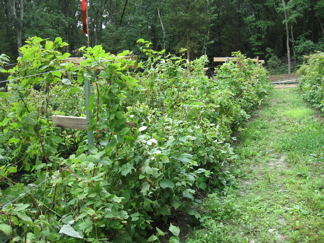
Our
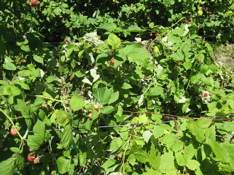
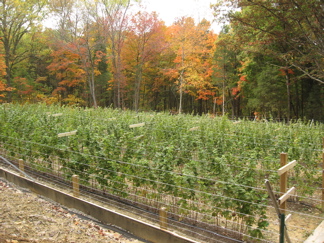
raspberry field is the biggest part of our operation. It is our
promary crop. The field is a new field, never been tilled before.
We accomplished this by removing a band of invasive red cedars
on the hill side. The field is terraced and uphill from the pond.
Our raspberry production is focused on more production in less
space. We are experimenting with a variety of pruning techniques
and with controlling the number of canes per foot to determine
if more and larger berries can be achieved with the varieties
we have selected. You can read more about our berry operation
here.
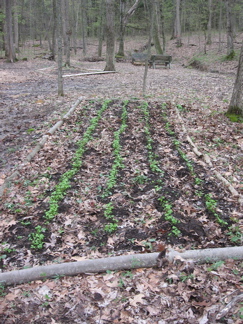
In
2016 we expanded the raspberry field to utilize the terrain and
open sunny spaces for melons and strawberries. We added an additional
terrace where we grow an annual crop of Charentais and heirloom
melons. Also in the expanded raspberry field we installed 2 raised
beds for strawberries.
 |
Our
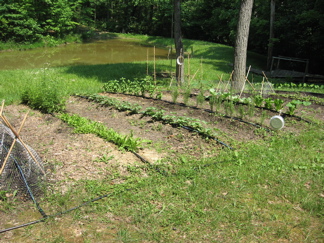
herb gardens are scattered around the farm. In some places
we have 50 foot rows, other places we have large whimsical
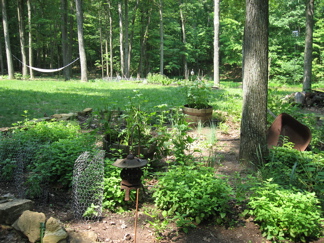
gardens that herbs lend themselves to. Many of our medicinal
herbs are thriving in woodland gardens we have established.
We
have tried to introduce 2-3 large areas each year for
more herb production. We experiment with taking multiple
cuttings of various herbs which allows for more vigorous
growth and a larger harvest in less space. You can read
more about our culinary herb production here
and our medicinal herb production here.
|
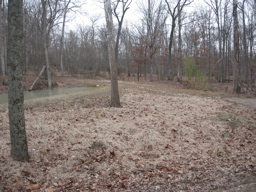 |
New
in 2013 we are introducing an orchard which will have plums,
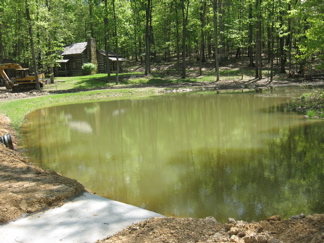
pears, apples and blueberries. When we enlarged the pond,
we cleared a significant amount of frontage on the dam so
where we grew mustard in 2012, we're adding the orchard.
|
WATER
USAGE
|
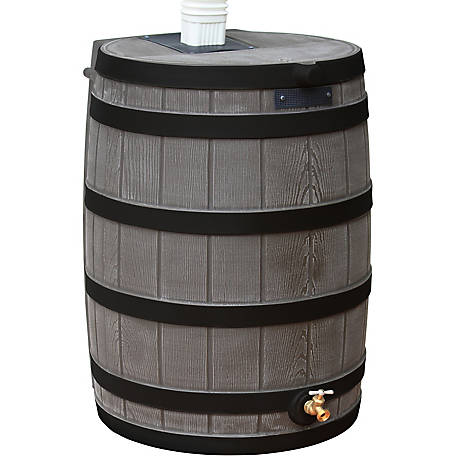
All
of our irrigation needs are supplied by rain or our pond.
Our farm is approximately 1 mile off the road away from
"grid" services such as electricity and water.
This leads us on any number of alternative pursuits and
solutions other farmers might take for granted. When you
plan to install an acre of raspberries and an acre of
herbs, not to mention personal vegetable gardens and fruit
trees, you have to think about irrigation first. Currently,
we draw 2500 gallons of water from our pond to irrigate
everything. This would not be possible without the clever
engineering, gravity and fluid dynamics we have become
so fond of.
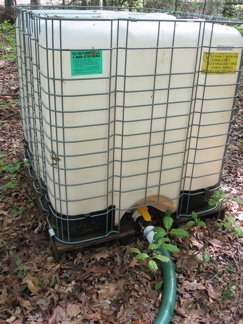
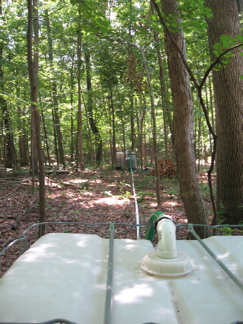
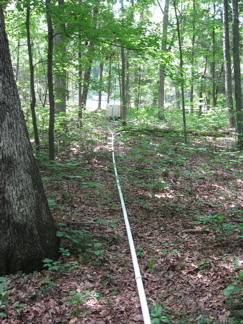
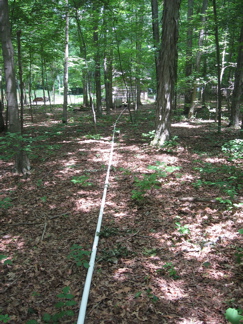
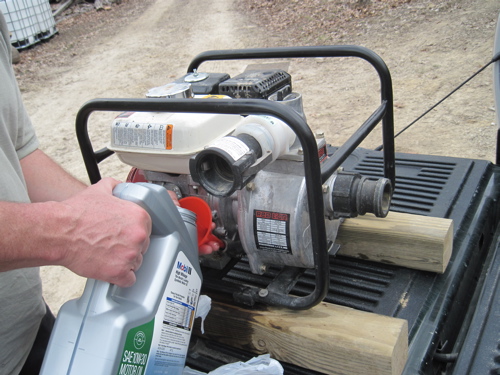
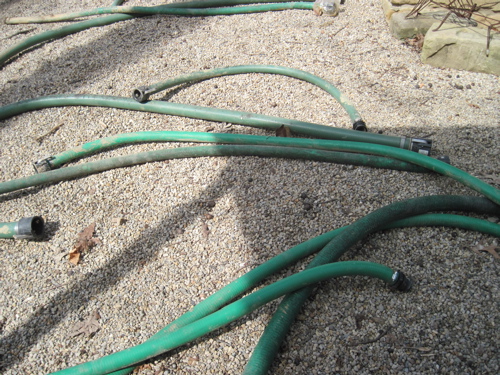
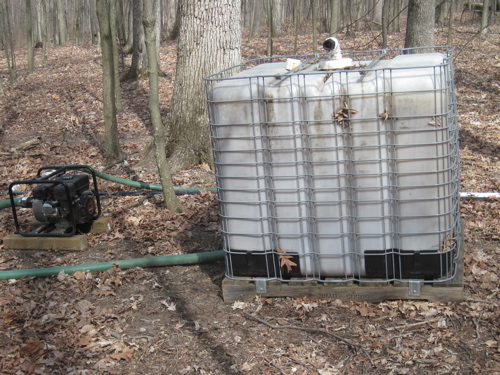
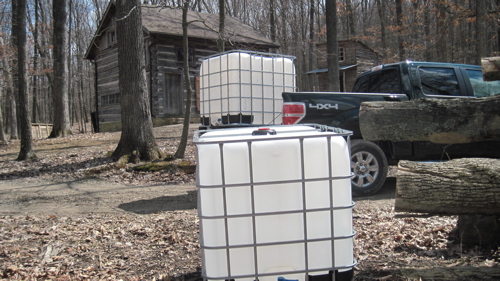
Our
irrigation involves pumping water uphill, filling multiple
tanks along the way. To date we have nine 275 gallon tanks
spread along our irrigation path. Four "stations"
and a base station each serving a different purpose.
Base
station is at the edge of the pond where the water is
drawn. Station one is approximately 50 feet uphill where
the pond water is filtered and sent to the other stations.
Station three, about 250 feet uphill. consists of three
tanks. One holding tank for water transfer to station
four above the raspberry field and two holding tanks for
the drip systems down hill in the herb gardens. The placement
of the tanks was very important for gravity to work. By
placing the tanks higher on the slope than the gardens
to be irrigated, we have enough water pressure to run
sprinklers as needed, but more importantly, to need pressure
reducing valves and heads for each drip zone.
In
2010 and 2011 we were successful in being able to provide
an inch of water to the raspberries all season as well
as being able to water all the herb beds as often as we
needed.
|
|
 |
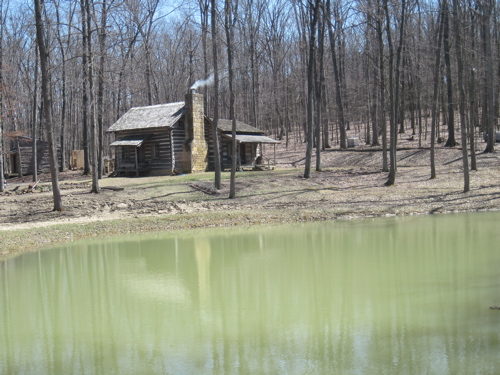 |
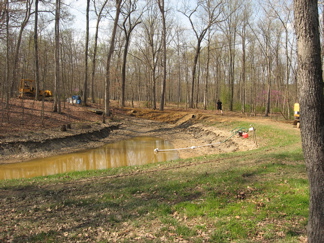
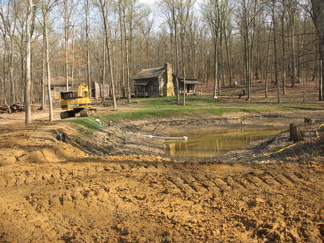
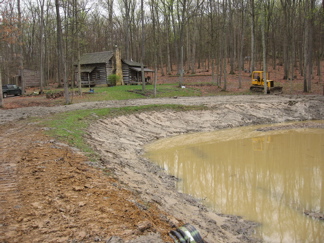
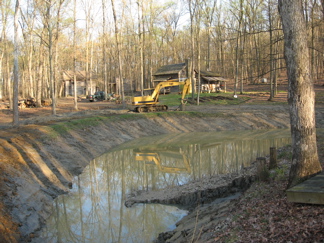
In
2012, because of the drought and the planned increases in our
crop production, we enlarged our existing pond. On the average
we draw 2500 gallons each time we irrigate. We are not sure if
it was good karma or good planning but the drought in Adams county
in 2012 was pretty severe and we were very glad we had enlarged
the pond!
|
BIG
CRITTERS
Adams County is known for a huge population
for whate tail deer, raccoons and wild turkeys, all of which
love berries. We knew we were going to have to protect our
harvests from these critters, and made attempts which would
work for a while and then not.
Our
raspberry field is cut into a wooded area which we cleared
and terraced and is in the center of our woods. Our foes
have been wandering in these woods for years long before
we came along, we saw their tracks in the field as we progressed
through from clearing to planting. We just weren't sure
how to keep them out.
We
talked with other farmers, no one had a good answer. It
wasn't until one of our neighbors told us how deer had eaten
all of his very large garden in one night leaving him with
nothing that we realized we needed to find an answer. Starr
did some research and found an interesting solution based
in Science and tested true by us.
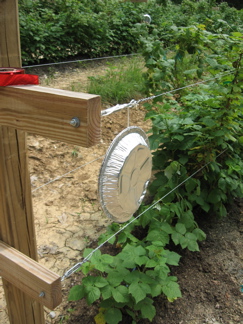
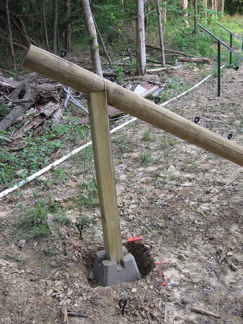
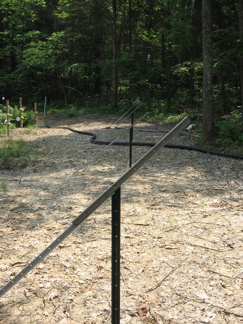
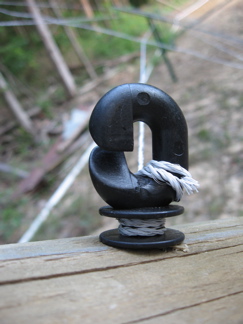
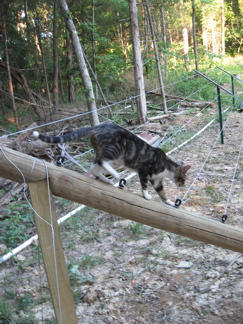
The
first time we went to the local feed store owner to ask
him for parts we needed, he scratched his head and said
"you want to do what?". He really was a good sport
and helped us immensely with our crude drawings and almost
baked solutions. We built a new twist on the solar powered
electric fence. As of fall 2011, not one critter
foot print in the fields, no deer, no turkeys, not even
raccoons. Birds however are another problem... |
WINGED
CRITTERS
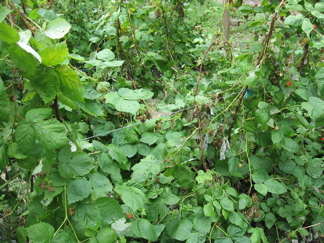
Adams County is home to some of the prettiest birds and some of
the largest. Two in particular love to claim our raspberries,
woodpeckers (Pileated and Northern Flicker) and Blue Jays. Not
graceful critters by any means, they are pretty clumsy in claiming
the berries, as they massively destroy the growth around them.
At one point another farmer had described his disgust in dealing
with raspberries asked us if we had had any bird damage. We more
or less said "What are you talking about?". Now we know:
| MOTHER
NATURE
2011 was the wettest and rainiest year on record in our
area. As our field is cut into a wooded slope and terraced,
we experienced a pretty awesome mudslide in the upper side
of the field. We knew eventually we'd have to deal with
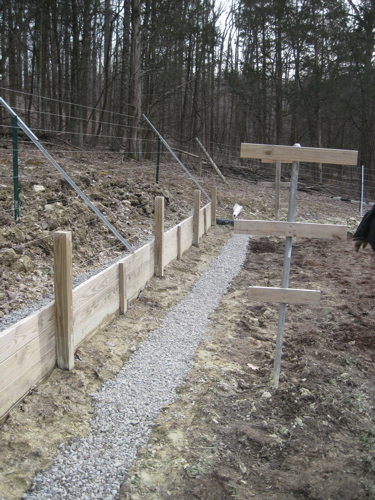
the issue, rain in 2011, forced the issue. In two very condensed,
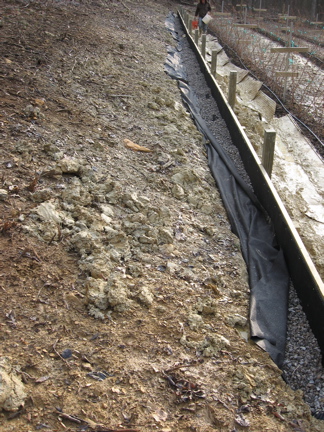
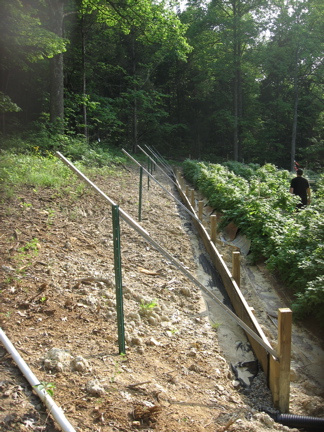
very wet weeks weeks we installed a 4 foot by 110ft retaining
wall. Most of it done in pouring rain. A French drain installed
behind the wall in pea gravel.
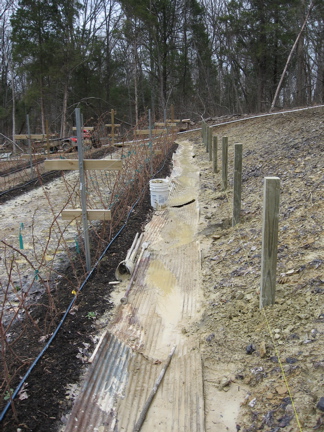
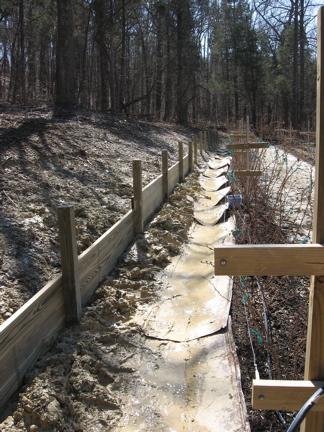
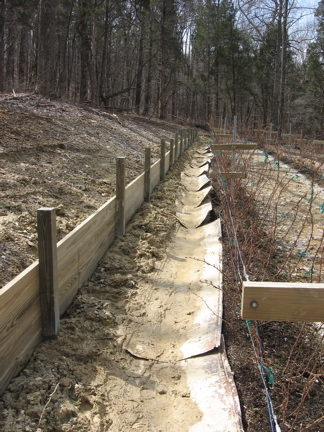
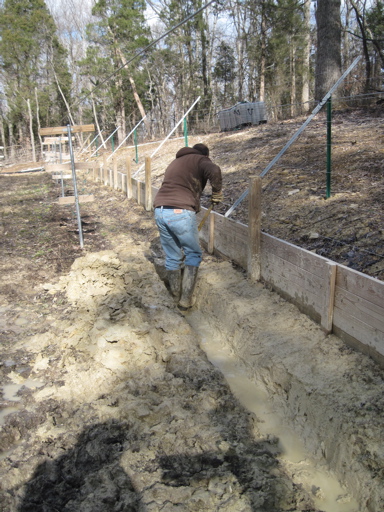
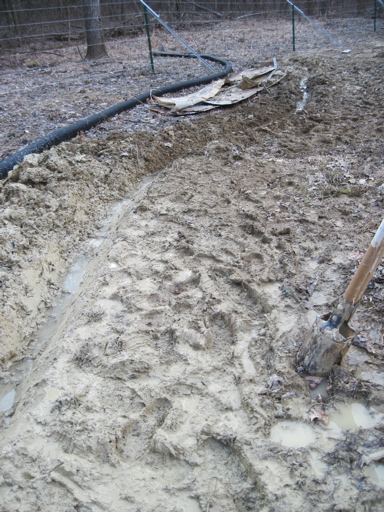
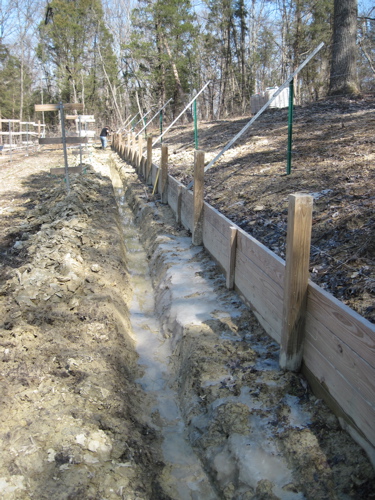
December
2012 and into 2013 we experienced yet another very wet winter
and had to revisit the retaining wall project. We needed
to install an additional French drain 110' long and 18"
deep in front of the retaining wall to encourage yet more
drainage from the hill behind the raspberry field. The original
drain worked, but water still persisted in settling in the
top row row of the field. With new raspberry varieties scheduled
at the end of April for that row, this unplanned project
became the immediate emergency at the end of March 2013!
In
2014 we added new drainage to the raspberry field, this
time in terrace 1. Raspberries do not like to have their
feet wet and the clay in Adams county is constantly providing
plenty of puddles! Near the end of the raspberry season
in 2013 we had significant flooding in terrace 1 and lost
a good number of raspberry canes so we planned to install
the drainage early in 2014.
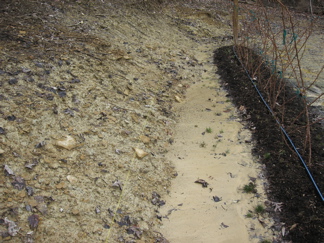 Mudslide
in Spring rains 2011
Mudslide
in Spring rains 2011 |
|
|

 ABOUT
US
ABOUT
US
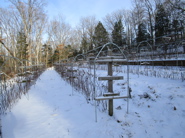













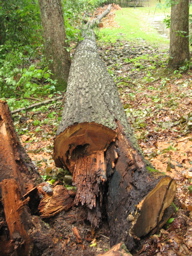 Large
Red Oak that fell from unobserved rot
Large
Red Oak that fell from unobserved rot